

A Detention Room, a Desk, and the Micropolitics of Listening

In this entry, PhD candidate Marcos Cordova reflects on how a moment in his work as a school teacher brought him back to his dissertation’s framework. Drawing on Spinozist affect, he explores how small shifts in a scene shape capacity, recognition, and what feels possible to say.
My PhD research asks how micropolitics works through art and everyday life, taking Emicida’s AmarElo as a key site of inquiry, an Afro-Brazilian neo-samba album (2019) that quickly exceeded the format of “music album”, reverberating across a wider media ecology, from music videos and live performances to a documentary, podcast, and related publications. Following Rolnik (2023), I use micropolitics to name the struggle over how life’s vital forces are enacted in everyday situations, whether they are diverted into reactive forms that reproduce the dominant order or open a breach toward invention, care, and other modes of existence. This is why I attend to affective relations, or, if you prefer, to the production of subjectivity, because it is there, before positions harden into statements, that bodies register what is possible to feel, do, and say.

In this blog, however, I am not going to discuss the artistic corpus itself. Instead, I want to reflect on how my work as a secondary school teacher often prompts me to revise and retest the conceptual framework that guides my research. The anecdote I delve into here took place in a time-out room in a public secondary school in The Hague, and it returned my conceptual toolbox to me with unexpected force. Methodologically, I work with a Spinozist account of affect, as reworked by Brian Massumi and Sara Ahmed, and this encounter with the student touched many aspects of that account.

The detention room is meant to neutralise escalation. Students sent out of class sit there until the lesson ends, in silence, writing a reflection about what went wrong and how to return differently. The same space is also used for other forms of school discipline and repair: students who arrive late spend an hour there as a kind of detention, working autonomously, reading, or catching up on assignments, while the room quietly holds together different tempos of consequence. There are signs everywhere: no talking. In this setting, silence is not only a rule but also a shared language of understanding, a way to keep the space workable for those trying to focus, cool down, or simply endure the hour. New to the school and still getting used to its routines and cues, I overlooked the signs. A student, whom I will call X, arrived. I asked why he was there. “Talking too much”, he said. I answered with a small joke, and we started talking. In practical terms, it was a deviation from the room’s purpose. In analytic terms, it made visible something easy to miss: institutions, sometimes for good reasons, manage intensity through rules about sound, speech, and spacing so that a shared space can function. Silence here is not simply absence; it is an organising technique.
That is the room’s institutional logic. Spinoza helps me read the same scene from another angle, not from the side of rules, but from the side of bodies and relations. Bodies are not isolated units that occasionally interact; they are constituted through relations, continuously affecting and being affected (Spinoza 1677). From that angle, the detention room can be understood as a careful reduction of stimuli: fewer relations, fewer surprises, a chance for the situation to settle. I also recognise that by speaking with X, I interrupted the silence he was meant to have, the quiet in which he could reflect on why he was sent out and how to return differently. In that sense, it was my fault, I took something the room is designed to provide. And yet, the dialogue that followed was so unexpectedly rich and so pedagogically meaningful that I suspect I would knowingly bend the rule again if the same kind of opening emerged. Spinoza, after all, also gives me another question: what kinds of relations increase capacity, and what kinds reduce it? My conversation with X, unintentionally at first, reintroduced a relation into a space designed to minimise them.

What I asked X next is something I often ask students when I want to understand how the school is landing on them, not only academically, but also socially and affectively. How do you experience the atmosphere here? Do you feel seen by teachers? Do you feel safe to make mistakes? Do you have at least one adult at school you would actually talk to if something is off? And, in a school like ours, where “diversity” is presented as a proud label, I also ask what that word means in practice. Do we only celebrate differences on posters and theme weeks, or is there really room for everyone in the everyday rhythms of the building, in how rules are applied, in who gets listened to, and in who is quickly read as a problem? X answered with a mix of sharpness and care, as if he had been waiting for someone to ask seriously, not as a formality but as a real invitation to speak.
Sara Ahmed helps me hear the stakes in that description. Emotions are not private possessions that sit inside individuals; they circulate, attach, become sticky, and shape orientations toward others (Ahmed 2004). “Diversity” can function like that. It can be celebrated as a public value while still leaving some bodies more easily out of place than others. The question is not whether difference exists, but how it is carried, where it gathers friction, and who is expected to do the work of smoothing it out. As the conversation opened up, X moved from the general language of “diversity” to the concrete textures of school life as a Muslim student. He told me that, even though Muslim students make up a major part of our school community, there is still no dedicated space for prayer. Instead, they pray in a quiet corner of the ground-floor corridor. The school has already identified this as an issue and is finalising a room that will be placed at students’ disposal. It has been renovated and decorated as a place of silence, meditation, and prayer. That detail stayed with me, because it shows how belonging is often negotiated through minor accommodations rather than recognised through intentional design. From there, it felt less abrupt that the conversation shifted toward something more intimate.

X asked me if I believe in God. I replied that I believe in something like God, but not the God of a sacred book. He leaned in and began testing my language. Do I believe in one God? Did “He” create us? I said I believe we are extensions of it. X immediately caught the “it”, and seemed almost outraged by the idea that I could refer to God as a “thing”, something inside us rather than a “He” above us. The questioning sharpened into a test of implications: if God is in us, do I think I am made of God, and therefore that I am God?
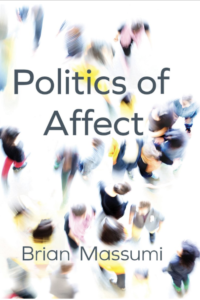
This was not a philosophical debate at a safe distance. It was an affective negotiation. Massumi’s account of affect as intensity is useful here: affect is a shift that moves through a scene before it becomes a named emotion or a fixed position (Massumi 2015). X was checking whether I was near or far, trustworthy or dismissible. I was trying to keep the encounter open without letting it collapse into caricature, his or mine. Brazilian philosopher and educator Paulo Freire (1970) would add that dialogue is not simply talking, it is an ethical stance that demands humility and a willingness to be addressed by the other, even within an unequal institutional relation. From that angle, X’s testing did not feel like a game. It felt like him probing the conditions under which I could recognise him, and under which he could recognise me, without either of us being reduced to a stereotype.

I tried to explain my own sense of “God” in Spinozist terms, not as a person or a lawgiver, but as an it, the single substance of life itself, with everything else as its extension, its modes, its unfolding in countless forms (Spinoza 1677). In other words, not a transcendent being above the world, but something like God or Nature, immanent to what exists. I did not put it to X in that vocabulary; no one needs Deus sive Natura before lunch, so I tried to say it in plain language: Not a God sitting up in the sky watching us, but more like the life force in everything, nature itself, something that’s part of the world and inside it. He tapped the desk in front of him and asked the question that keeps returning to me: if God is in all living things, is God in this desk? I laughed, hesitated, and offered a compromise about the tree that the desk once was. X pushed further: when we transform nature into objects, are we killing the God inside them? What about rocks and metals?
The desk did something to my thinking. Spinoza’s Deus sive Natura, God or Nature, refuses the split between a transcendent creator and an inert world (Spinoza 1677). Yet in everyday speech, I still rely on soothing distinctions: living versus nonliving, sacred versus merely useful. X’s question made those distinctions wobble. It exposed where my Spinozism becomes a comforting metaphor rather than a demanding ontology. In Spinoza’s terms, I was confronted with the limits of my “adequate ideas”, and with the possibility that a better understanding begins precisely where one’s habits of explanation fail.
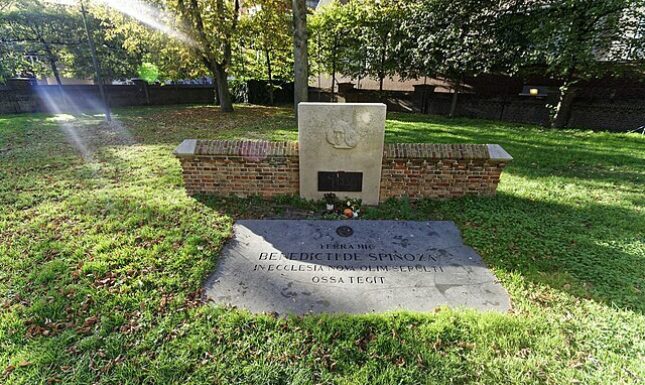
When X asked where I got these ideas from, I mentioned Spinoza’s Ethics. After a short pause, he asked if it was a sacred book like the Bible. I joked that it is sacred for some, but not a religious manual. He wanted to see the book and the philosopher, so I showed him an image. What surprised me was how quickly he became engaged when I added that Spinoza is from this country and that his life was marked by exclusion; he was expelled from his Jewish community in Amsterdam. I also mentioned that he lived in our city for a period and is buried in the Nieuwe Kerk in the city centre, a place X immediately recognised. X reacted with curiosity, as if the philosopher suddenly became less abstract and more relatable: someone who had negotiated belonging as an outsider, in the same streets we now share. He then offered to bring me an English Quran so we could discuss it. After all, he had listened carefully to my view of God and tried, with real effort, to make sense of it on his own terms. It felt only fair that he would propose the same exchange in reverse. I accepted the offer of reading as an encounter, as a way of staying with difference without turning it into either threat or ornament, while declining any invitation to conversion.
I left the room thinking about micropolitics as something that happens before declarations, in the minute shifts through which bodies test, invite, and recalibrate what can be said. A school is full of devices that distribute affect: where you sit, when you can speak, how quickly conflict is individualised, and when silence is demanded. These procedures are rarely neutral, because they shape who appears as a “problem”, and who feels safe to speak. Ahmed helps me describe how institutional atmospheres can quietly orient bodies toward comfort or vigilance (Ahmed 2004). Massumi helps me notice how a small change in intensity can open a new path for what happens next (Massumi 2015). Freire helps me insist that these openings matter, because education is always also about humanisation, about whether a space allows people to become more present to themselves and to one another (Freire 1970). For Spinoza, ethics is not obedience to an external code, but the cultivation of encounters that increase collective capacity and reduce reactive capture, shifting us from automatic reactions toward more adequate ways of understanding what a body can do in relation to other bodies (Spinoza 1677). In that small scene, a rule meant to keep the room workable was momentarily broken by conversation, and a different distribution briefly emerged: differences could be negotiated without being romanticised, and my own conceptual comfort could be unsettled by a desk.
This is why the anecdote belongs in my methodological journey. It reminds me that micropolitics is not a grand theory applied from above. It is the ongoing labour of listening, refusing what must be refused, respecting what can be respected, and staying with the encounter long enough to let it change what you thought you already knew.
Works Cited
Ahmed, Sara, The Cultural Politics of Emotion (Edinburgh: Edinburgh University Press, 2004).
Freire, Paulo, Pedagogy of the Oppressed, trans. Myra Bergman Ramos (New York: Herder and Herder, 1970).
Massumi, Brian, Politics of Affect (Cambridge: Polity Press, 2015).
Rolnik, Suely, Spheres of Insurrection: Notes on Decolonizing the Unconscious, trans. Sergio Delgado Moya (Cambridge: Polity Press, 2023).
Spinoza, Baruch, Ethics, trans. Edwin Curley (London: Penguin, 1996 [1677]).
© Marcos Neto de Cordova and Leiden Arts in Society Blog, 2026. Unauthorised use and/or duplication of this material without express and written permission from this site’s author and/or owner is strictly prohibited. Excerpts and links may be used, provided that full and clear credit is given to Marcos Neto de Cordova and Leiden Arts in Society Blog with appropriate and specific direction to the original content.






0 Comments