
Contemporary Preppers in the Light of Ancient Apocalypticism

Due to popular media and recent events, preppers have entered the mainstream. In this blog post, Tim van Amersfoort seeks to understand how modern prepper visions concerning the apocalypse relate to the ideas of ancient Jewish and Christian apocalypticism.
Preppers have become increasingly more well-known and mainstream. They were already being popularized by books such as I am Legend (1954), The Zombie Survival Guide (2003), and One Second After (2009), videogames such as Fallout (1997-2018) and Far Cry 5 (2018), and movies and tv-shows like 10 Cloverfield Lane (2016), The 100 (2014-2020), The Last of Us (2023-), and Fallout (2024-), not to mention the countless documentaries following doomsday preppers, as well as the self-help guides written for beginning preppers. Just a few months ago, even the Dutch government got involved, urging their citizens to prepare for various emergencies, and providing them with a booklet filled with suggestions.

Whether one preps for short-term emergencies like power-outages, floods, or food-shortages, or for complete societal collapse due to nuclear war, virus, or civil unrest, the general idea remains the same: A prepper is defined by TruePrepper.com as “someone who creates a plan, gathers resources, and gains skills so that they can be more prepared for emergencies, disasters, and other survival situations.” A prepper waits for an expected, soon-to-come End of the World, however big or small this may turn out to be. In this way, the prepper stands in a long tradition of ancient apocalypticists who expected that the End Times would arrive sooner rather than later.
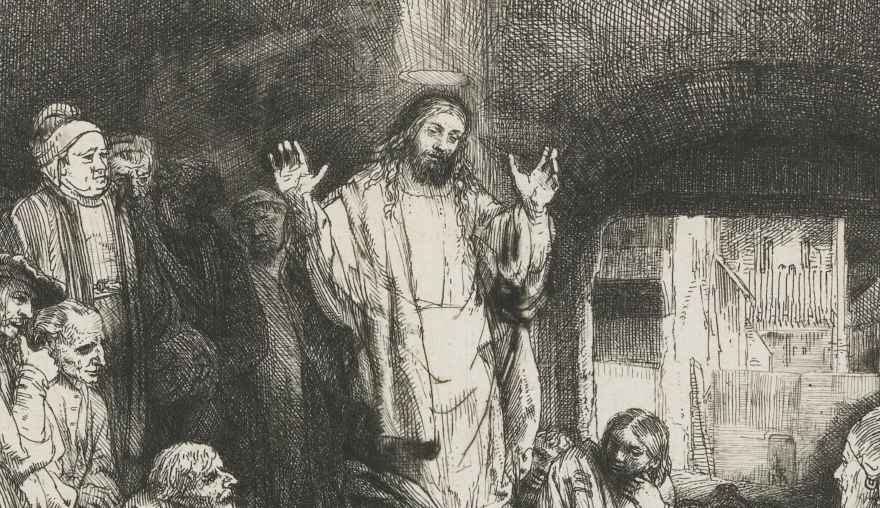
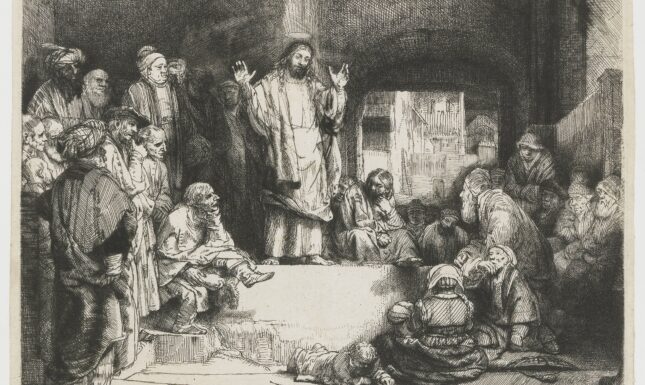
Before we return to the case of our modern preppers, let us first take a look at ancient apocalypticism. There is still a (sometimes heated) debate among experts about the exact definition of this system of beliefs. This is partly caused by confusing terminology. Different scholars have different conceptions of apocalypse, apocalyptic, apocalyptic literature, apocalyptic ideology, and the relation between apocalypses and eschatology (i.e. the study of the End and the soul after death). From this jumble of examples and definitions, however, it is possible to distil a few common features (though these are based on Jewish and Christian apocalypses). These consist of (1) a revelation usually given by a supernatural agent (2) “disclosing a transcendental reality which is […] temporal, insofar as it envisages eschatological salvation” (Collins 2014, 2-3) and is (3) often concerned with the judgement of individuals wherein the elected faithful will be saved while the faithless will be damned. The most famous apocalypticist would undoubtedly be Jesus, who drew heavily from Jewish traditions. Jesus is famous for his ethical teachings, but he also espoused a coherent apocalypse. He believed God had granted him knowledge of future events (1) which included knowledge that “the kingdom of God has come near.” (2) This kingdom would only be entered by those deemed worthy by a cosmic judge called the Son of Man while others would be “cast […] into the furnace of fire.” (3). It is clear that apocalyptic messages entail more than a simple announcement of the World’s End, but how does this ancient apocalyptic tradition reverberate in modern times?
There are plenty of contemporary Christian groups that believe in apocalypses featuring the three elements discussed above. Apparently, they can even count several American generals among their number. But to what extent do the beliefs of preppers fit in this apocalyptic tradition? Preppers exist all over the world, and as such are as varied and diverse as any global community. Generally, they have a rather negative perception of human nature and thus do not trust others to cooperate during a crisis. For this reason, they create plans to sustain themselves and only a few trusted friends and/or family members. Their apocalyptic notions, however, do not seem to differ too much from the pre-established tradition.
Many preppers experience an awakening (1) that can be inspired by anything ranging from a personal crisis-event to a dream, or to a particular news report. This awakening is not so much a revelation, but rather a realization that the current social order cannot be maintained during major crises. This may be related to a guiding supernatural agent, however. Many preppers express a belief in God, even when their specific vision of the apocalypse is not necessarily religious. This realization leads preppers to believe that they need to prepare for the coming End (2). Couched in the language of apocalyptic traditions, a prepper’s awakening stimulates them to create the means for their own salvation after the End. For some, this salvation only entails their continued survival in relative comfort. For others, this also includes a break from current social norms. Some preppers have expressed glee at the prospect of battling others for the few remaining resources. One participant of the Doomsday Preppers (2012-2014) reality show even created special homemade body armour and trained with his friends to commit armed robbery in the post-apocalypse. But while some see salvation in being allowed to act with impunity, not all preppers wish to participate in a Mad Max style brawl. Many posts on r/preppers (an online forum on the social media site Reddit) present visions of how preppers wish to create utopian communities after a societal collapse. There does seem to be an implicit element of judgement in prepper media. There is no cosmic judge, but the elected faithful prepared for the End and thus will be able to reach their salvation, while the faithless did not and thus will be condemned to a harsh struggle for survival, or even death (3).
This promotional video for the reality show Doomsday Preppers by National Geographic shows the ‘War Machine’ one participant bought and modified to “combat disorder and establish authority” after an apocalyptic disaster. It was designed to withstand bullets and landmines, and even has a rifle added on top to shoot at others.It is evident that preppers have adopted, and adapted, many elements of a much longer tradition of thinking about, interacting with, and preparing for a coming End of the World. The apocalypses envisaged by preppers are often divorced from specific religious imagery, but they do follow the same mechanics identified in ancient Jewish and Christian apocalypticism. While preppers are often presented as silly for their specific apocalyptic beliefs, they do not seem all that different from the ancient apocalypticists that are revered even today.
Further reading:
Barker, K., ‘Awakening from the Sleep-Walking Society: Crisis, Detachment and the Real in Prepper Awakening Narratives’, EPD: Society and Space 40:5 (2022) 805-823.
Collins, J.J. ed., The Oxford Handbook of Apocalyptic Literature (Oxford 2014).
DiTommaso, L., ‘Apocalypses and Apocalypticism in Antiquity (Part 1)’, Currents in Biblical Research 5:2 (2007) 235-286.
Ehrman, B., Jesus: Apocalyptic Prophet of the New Millennium (Oxford 1999).
Fetterman, A.K., B.T. Rutjens, F. Landkammer, and B.M. Wilkowski, ‘On Post-Apocalyptic and Doomsday Prepping Beliefs: A New Measure, Its Correlates, and the Motivation to Prep’, European Journal of Personality 33 (2019) 506-525.
© Tim van Amersfoort and Leiden Arts in Society Blog, 2026. Unauthorised use and/or duplication of this material without express and written permission from this site’s author and/or owner is strictly prohibited. Excerpts and links may be used, provided that full and clear credit is given to Tim van Amersfoort and Leiden Arts in Society Blog with appropriate and specific direction to the original content.



0 Comments